Going barefoot

Perhaps rewilding starts with our feet. When we walk, our feet are the connection with the earth we are walking on. But we don’t feel the earth, as our feet are clad in shoes, often with thick soles. We want to protect our feet against stones, spines, insects, snakes and dirt. And that makes sense – humanity has probably worn some kind of feet protection since the invention of clothes. But to wear shoes every single day on every single surface is taking it too far. Our feet are made for walking in very diverse circumstances, with 26 bones, 33 joints and more than 100 muscles, tendons and ligaments (1). Strong feet can handle uneven surfaces, steep hills and downward slopes. To keep your feet strong, you don’t put them in sturdy shoes all the time, as this will weeken your feet muscles.

I only discovered the existence of barefoot shoes a few years ago. And it immediately made sense to me. I had always had trouble finding shoes that were actually comfortable and that kept my feet warm in winter. I loved living in the tropics, as I could wear sandals or flipflops most of the time. Or just walk barefoot on the grass.

Back in The Netherlands, I wanted to hold on to that feeling, so barefoot shoes – made to protect your feet while if feels like you are walking barefoot – seemed like a perfect solution to me. My first pair of barefoot shoes was a pair of Merrell shoes, from their barefoot collection. It was a big shift from hiking on regular (low) hiking boots to these shoes. To transition into them, I would take them with me on my hikes, and only wear them for short amounts of time on unpaved paths. At the same time, I did exercises at home to strengthen the muscles of my feet (2).

After a while, I was able to do entire hikes on barefoot shoes, and added some other pairs to my collection. My favourite brands are Vivobarefoot (they have great waterproof hiking boots for winter hikes), Merrell and the German brand Wildling. The best shop to get barefoot shoes in The Netherlands is Barefoot & More in Arnhem. They have a great collection of shoes and an experienced and helpful staff. If Arnhem is too far for you, try Huna Outdoor in The Hague. They sell Merrell and Vivobarefoot shoes.

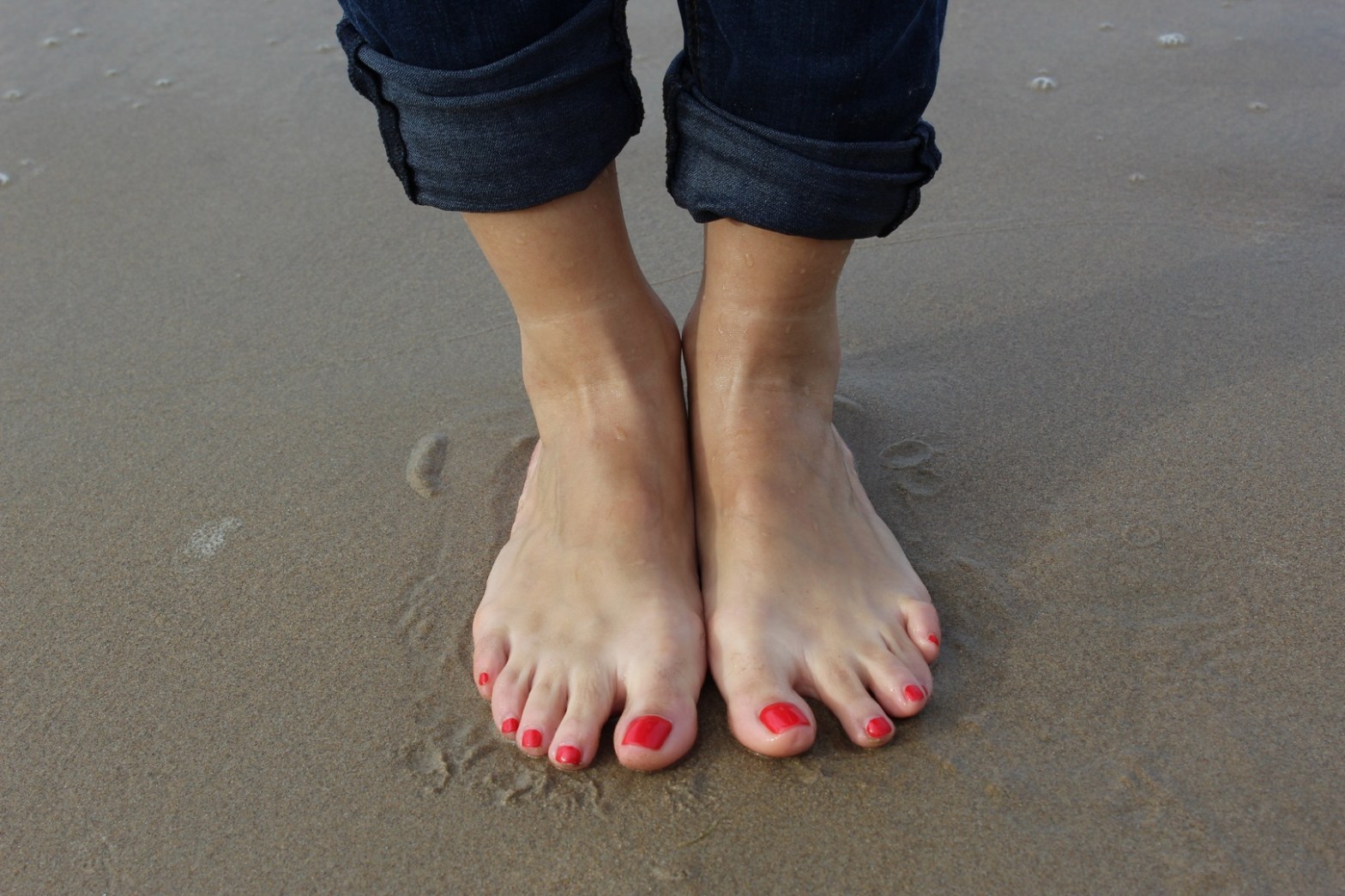
The next step on my barefoot journey was to go completely barefoot. To actually take off my shoes during a hike or walk and to feel the ground under my feet. It felt like adding a whole new dimension to my experience of nature. I suddenly became aware of the temperature of the soil, the texture of the sand, the leaves or the pine needles on the path. It made me feel grounded and very much in touch with nature.

Going barefoot is not possible under all circumstances or weather conditions. You also need to give the soles of your feet time to get used to touching the ground without the protection of shoes. If you want to seriously try this and make it a part of your daily life, I can recommend the book Barefoot Walking by Michael Sandler and Jessica Lee.

For those times and circumstances that hiking without any shoes is not possible, I like to wear Vibram’s Five Finger shoes or, in summer, barefoot sandals made by Panta. They come closest to what is feels like to walk without shoes.

Would you like to free your feet? Try taking off your shoes on a sandy path or on the beach during your next walk. Or invest in a pair of barefoot shoes and feel what that does for your feet and your whole body!

(1) Source: Wikipedia; (2) A great book on transitioning into barefoot shoes is Whole Body Barefoot by Katy Bowman

The 5 best apps to use on a nature hike

If you are like me and you enjoy hiking and nature, it is good to know there are apps that can help you get an even better hiking experience.

The days of carrying heavy fieldguides around if you wanted to identify plants, birds or insects in the field, are over. Fortunately, there are plenty of apps now that help you to know and understand what creepy creatures and wonderful plants you meet on your hike. Just take a picture and let an app identify what it is. Mismatches happen, of course, but most of the time the app will give you the correct name of the plant, butterfly or bird you encounter on the trail.

But where to start and which apps to use? Let me share my favourite apps with you and show you how they work.

1. ObsIdentify

ObsIdentify is my go-to app for anything in nature I can get a picture of. It works great for indentifying plants, insects, snails, frogs, you name it. It does well with mushrooms too, but they can be a bit tricky to identify, so you may want to use a different app for that (see below).

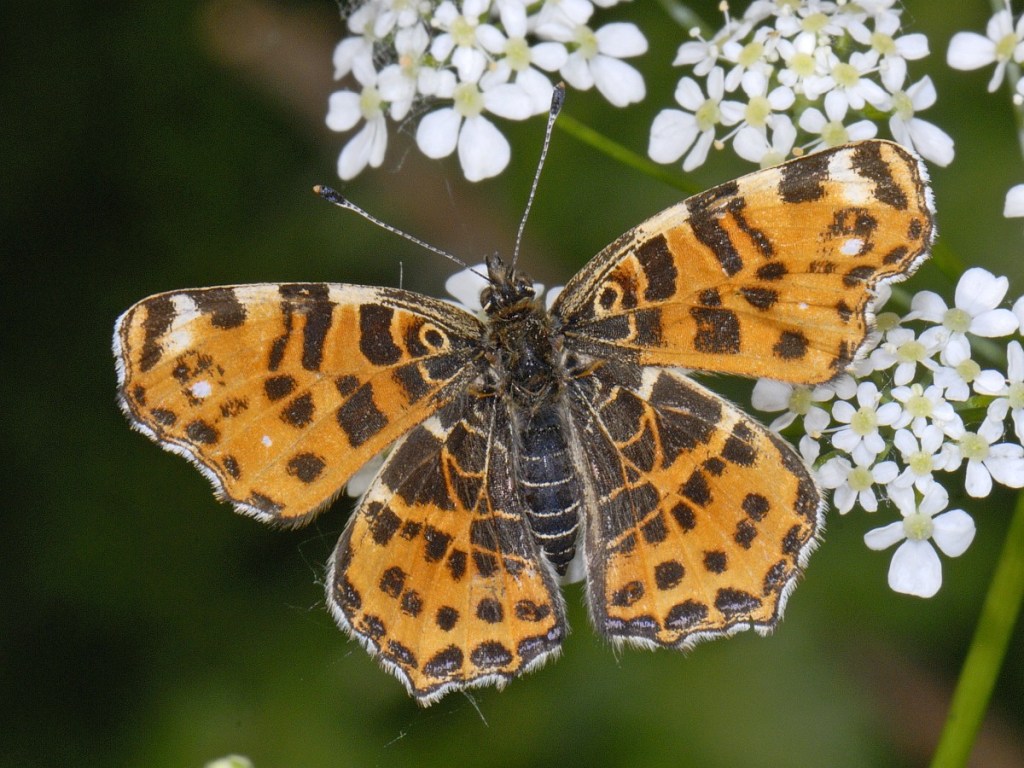
Map butterfly. Picture by A.H. Baas, Saxifraga

The great thing about ObsIdentify is that it not only helps you to identify something, but it also records anything you observe and enter in the app. This way, you contribute to the registration of where and when all kinds of species have been observed. It also tells you if what you see is common, rare or very rare. Always nice to know!

To use the app, just download it on your phone. You do need a (free) account before getting started. It then stores all your observations in the app, and even rewards you with badges for your registrations.

Learn more about ObsIdentify

2. Pl@ntNet
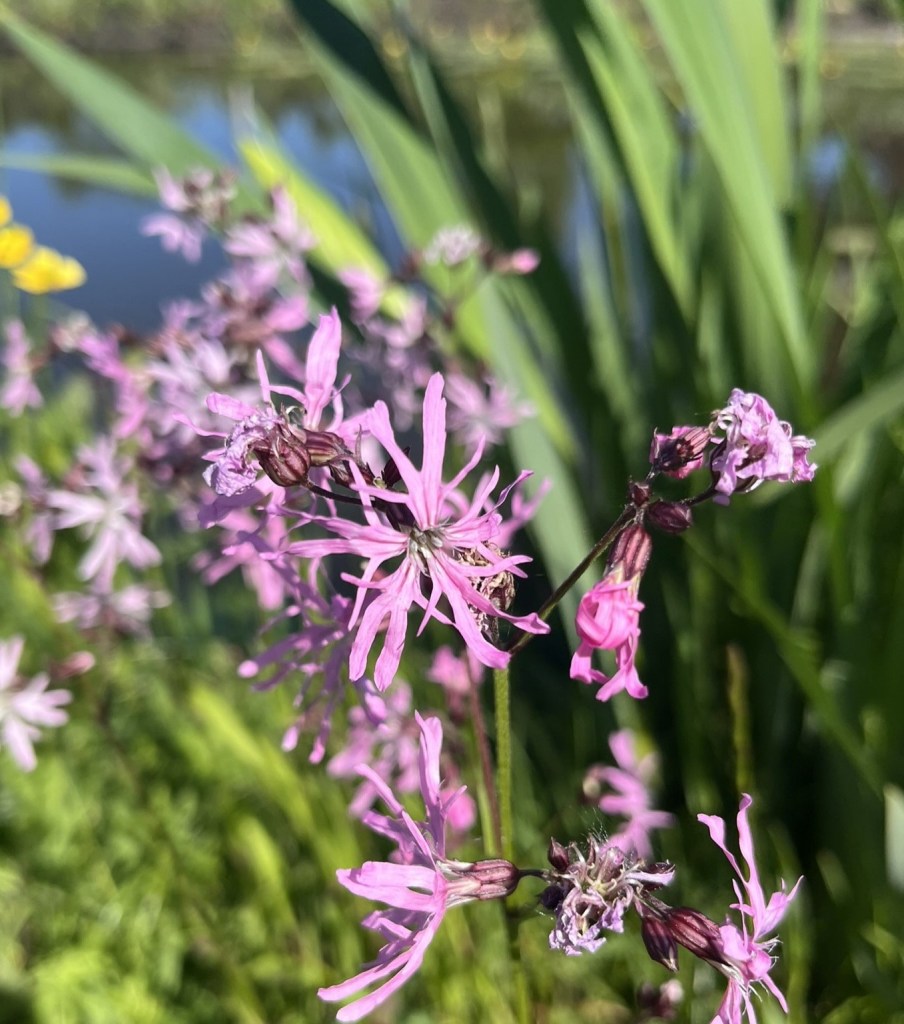
Ragged-robin (Silene flos-cuculi)

A great app for identifying plants is PlantNet. It is a bit more precise than ObsIdentify, which is helpful if ObsIdentify is not conclusive about your plant. In the PlantNet app, you can enter pictures of the flowers, leaves, fruits and bark of the plant or tree separately. This results in a better identification. I have found it to be especially helpful for the identification of trees.

Learn more about Pl@ntNet

3. Picture Mushroom
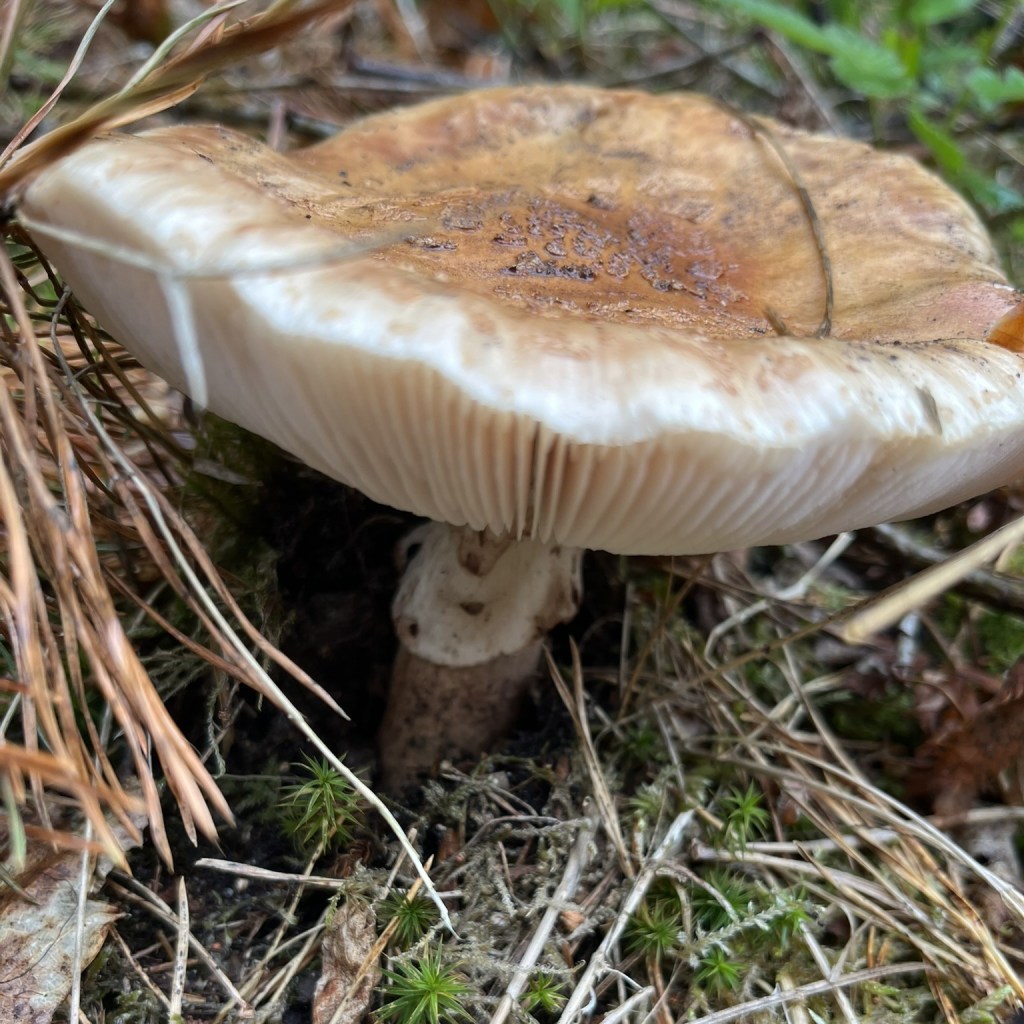
Blusher (Amanita rubescens)

Mushrooms can be tricky to identify, even for experts. You need to look at the top, bottom and general shape of the mushroom. Some mushrooms can only be identified by looking at it through a microscope! But for most common species, pictures taken from different angles will be enough to help identify the mushroom. And that is wat Picture Mushroom does for you! When you open the app, it tells you to take a series of pictures (top, bottom and side) and then tells you what the mushroom most likely is. It also gives you information about whether the mushroom is edible or poisonous.

Learn more about PictureMushroom

4. Merlin Bird ID
Bluethroat. Picture by Bart Vastenhouw, Saxifraga

But what about birds? If you have ever tried to take a picture of a bird with your phone, you know how difficult that can be. And often you just hear the bird, but don’t see it anywhere. That is where Merlin Bird ID comes in. It helps you to identify birds in three different ways. Step-by-step (by answering a number of questions about the bird), by sound and by uploading a picture. Identification by sound is what I use all the time, and it works wonderfully.

How it works

When you are out on a hike and hear a bird, hit the ‘sound’ (geluid) button right in the middle of the opening screen in the app. It immediately starts recording, and analyses the bird song. When the app recognises the bird, it gives you the name and a picture of the bird. When you hear various birds at the same time, you will get a list of bird names. Whenever a bird sings again, the name of the bird highlights. This is a great way to learn to recognise birds by their song. And you’ll know what to look for when you hear a bird!

For the Merlin Bird ID app, you do not need an account. Just download it on your phone, get the birdlist for your region, and start listening for birds!

Learn more about Merlin Bird ID

5. Maps.me

When you are on a nature hike, looking at birds, plants and insects, you don’t want to get lost! In the middle of a forest or somewhere in a National Park, Google maps is not going to be of much help, as it doesn’t show you all the small tracks and trails. The app Maps.me does a much better job at this. Even the smallest paths will show up on the map. Download the app and then the maps of the area you are planning to go for a hike. It’s all free ánd you can use the maps even when you are offline.

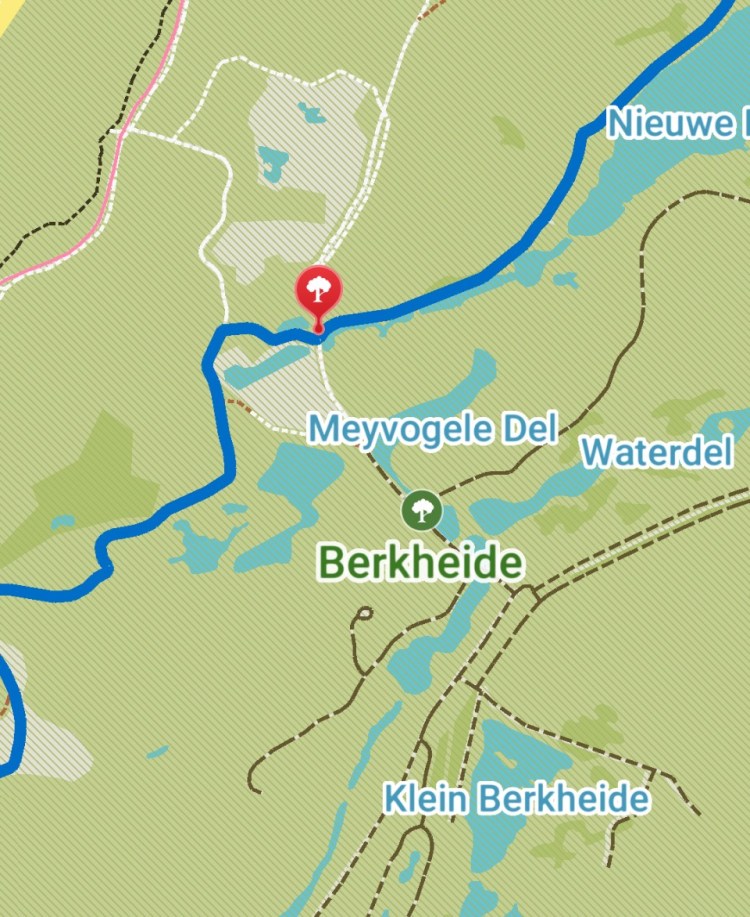
Uploading tracks in maps.me

One of the best features of maps.me is the option to upload .gpx files of the track you are planning to walk. Gpx files can be found on most websites that offer hikes. If you download the file and upload it in maps.me, it will appear as a coloured line on the map (the blue line in the picture). This makes it almost impossible to get lost during a hike, as all you have to do is follow the line on the map.

Learn more about maps.me

Would you like to try some of these apps, learn more about nature, see new places and meet new people? Join a Dutch Nature Hike!

What is rewilding

Rewilding is ‘returning to a state of wildness’. As human beings, we have evolved as people that are able to survive in the wild, depending on the natural world around us. At the same time, we have also changed the world around us, to make our survival easier. We have domesticated plants and animals, so they could produce food for us. We have built houses and cities to live more comfortably, and we built up elaborate social systems to be able to live together with large numbers of people. For many, this has brought prosperity and happy and healthy lives.

But every gain comes with a loss. The world we live in is built on exploitation. We use plants, animals and other natural resources to our benefit, but to such an extent that we are slowly destroying the natural world we all depend on. We fill our houses with furniture, clothes, shoes and the latest gadgets – all produced at the other side of the world by people we don’t know. Only the ‘happy few’ can enjoy this level of comfort and prosperity. Our social and economic systems are build on exploitation of not only natural resources, but also of people.

We have also lost our deep connection with the natural world around us. Since we no longer feel like we depend on it directly – our food comes from the supermarket, and if it’s cold we just switch on the heater in our homes – we might see the natural world as just a nice green backdrop to our daily lives. Or not even notice it at all. This affects our health and our happiness. Millions of years of evolution can not be made undone by just the few hundreds of years it took to change our societies into the modern world we live in now. We are still the ‘wild’ people we used to be. It is in our genes, in our brains and in our bodies.

This means we still have both the skills and the needs of our wilder ancestors. The needs are there, and the skills can be developed. As human beings, we need to move a lot more than we do now. We have the innate skills to walk long distances, to run, to climb, to hang from branches. Instead, we spend most of our time sitting at a desk or on a couch. We have eyes that can spot a prey or an edible plant from far away. Instead, we look at screens most of the time. We have feet that are perfectly developed to walk or even run over uneven terrain, without the protection of sturdy shoes.

Wouldn’t it be great if we could try and get some of those skills back and at the same time fulfill our need to be closer to nature? To me, that is how we can begin to rewild ourselves. It all starts with spending more time outdoors, in all kinds of weather. Being outdoors keeps you moving and helps you connect to the world around you. Try and learn the names of as many plants and animals as you can – they will become your non-human friends you’ll meet everywhere. Find out what is edible and what isn’t and you’ll always have something to snack on when you’re outdoors. Going for a (long) walk is a great way to combine natural movement with increasing your knowledge of the natural world around you.

Hence the Dutch Nature Hikes. They are intended to help you connect with nature and people, while walking a nice long distance. It is good for your body ánd your soul. Rewilding the world starts by rewilding yourself, step by step.